The first person we trust is rarely someone we choose.
They arrive before language, before judgment, before we understand what it means to be safe or unsafe. They are simply there—steady, familiar, woven into our earliest sense of the world. They are the first voice we recognize, the first presence we seek, the first place we return to when something feels wrong.
For many of us, that first person is a parent. Not because they are perfect, but because they are first. They are the first witness to who we are becoming. The first place we learn what care feels like. The first place we learn what it means to be held.
The first heart I ever made was for my mom.
Not as a symbol. Not as a holiday gift. I made it because I needed to put something solid into the world—something shaped slowly, something that could be held—something that said, without explanation, you matter to me in a way that doesn’t expire.
That is where these hearts began.
They weren’t born from romance or tradition or sentimentality. They came from trust. From the recognition that the deepest loves in our lives often don’t follow a script or a calendar. They live quietly in the background, shaping who we become long before we have words for them.
The first person we trust is often our first hero.
Not because they are flawless, but because they are the one we believe will come back. The one we assume will protect us. The one we look for instinctively when we are afraid. Even when we later learn they are human, limited, imperfect—that early trust doesn’t disappear. It becomes foundational.
Those kinds of loves don’t stop mattering when we grow up. They don’t get replaced by romance. They don’t lose value because they aren’t dramatic. They become the framework through which we understand loyalty, devotion, and permanence.
These hearts come from that understanding.
They are not decorations. They are not shorthand for romance. They are not meant to perform meaning. They are made slowly, from multiple pieces of wood, intentionally joined, because that is how real attachment works. We are not formed whole. We are assembled over time. We are shaped by what holds us, what leaves marks, and what chooses to stay.
A heart, as I make it, is not a symbol of perfection.
It is a record of care.
The grain moves in different directions. The seams are visible. Nothing is hidden. And yet, the piece becomes one thing—solid enough to be kept, small enough to be held, quiet enough to exist alongside you without demanding attention.
That is how enduring love behaves.
The loves we want in our lives forever are not always romantic. They are the ones that anchor us. A parent. A grandparent. A child. A friend who stood where others didn’t. Sometimes, they are not human at all.
Sometimes, they are a dog.
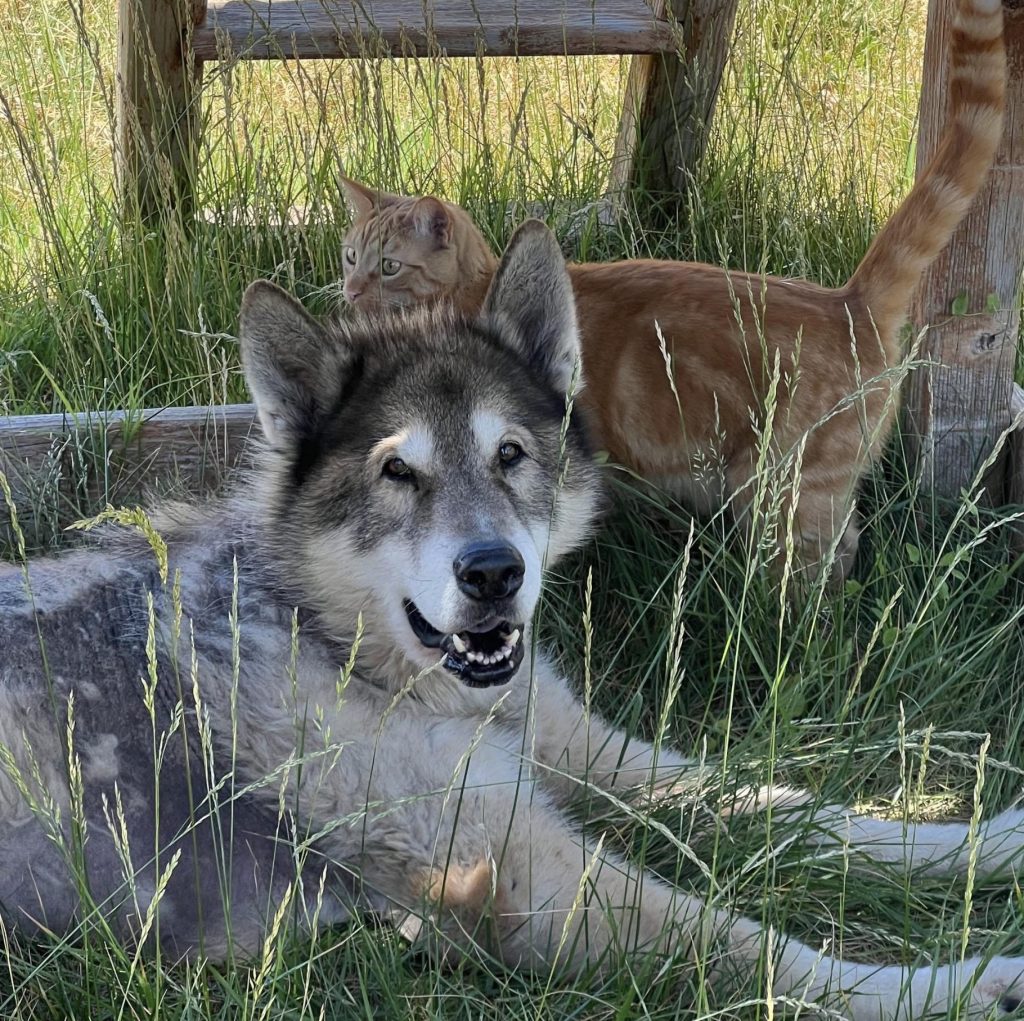
Anubis was the first wolf I ever called mine.
Not owned. Not possessed. Chosen.
He wasn’t part of a phase or a chapter. He was presence. He was constancy. He was the kind of love that doesn’t need language to be understood. The kind that watches, waits, stays. The kind that doesn’t ask you to be anything other than what you are in that moment.
He passed in October.
It has taken me this long to honor him with a heart, and that feels right. Some loves cannot be rushed into remembrance. They need time. They need distance. They need space to settle into something that can be touched without breaking open.
The heart I am making for Anubis will be carved from the hardest wood, Ironwood.
Not because difficulty equals virtue, but because commitment does. Because the resistance of the wood mirrors the depth of the bond. Because the time it takes—longer, slower, more demanding—reflects the kind of love that was never casual or convenient.
This heart will take longer to shape. It will require patience. It will ask my hands to stay present when they might want to hurry. And that is exactly the point.
Love like that was never fast.
Anubis was not a moment. He was a constant. He was a forever love, even now. Especially now.
The length of time it takes to make this heart is not a delay. It is a devotion. It is my way of staying with him, of honoring what did not end just because his body did.
This is also part of the lineage of the hearts.
They are for the people—and the beings—who taught us what loyalty looks like before we had words for it. The ones who became our internal reference for safety, courage, or presence. The ones who remain part of us, even when they are no longer physically here.
When someone is drawn to one of these hearts, I don’t think it’s because they want a heart. I think it’s because they recognize someone. A presence. A relationship. A love they do not want to lose track of.
That is why these hearts are not rushed. They are not tied to a single day on the calendar. They are not explained or justified. They wait until the right person recognizes them. Until something quiet inside says, this belongs with me, or this belongs with them.
The first heart went to my mom because she was the first person who ever held my life in her hands.
The heart for Anubis comes later, because some loves ask us to grow into the honoring of them.
Every heart that comes from my hands carries this same intention—not as repetition, but as continuity. A throughline of trust, devotion, and permanence.
These are not just hearts.
They are acknowledgments.
They are records of care.
They are a way of saying, you mattered to me in a way that time does not erase.
And when one finds its way to the right person, it doesn’t feel like a purchase.
It feels like recognition.
Leave a Reply